Dan Frio Breakdown• Friday, Dec 19
How the Bank of Japan Can Move Your Mortgage Rate
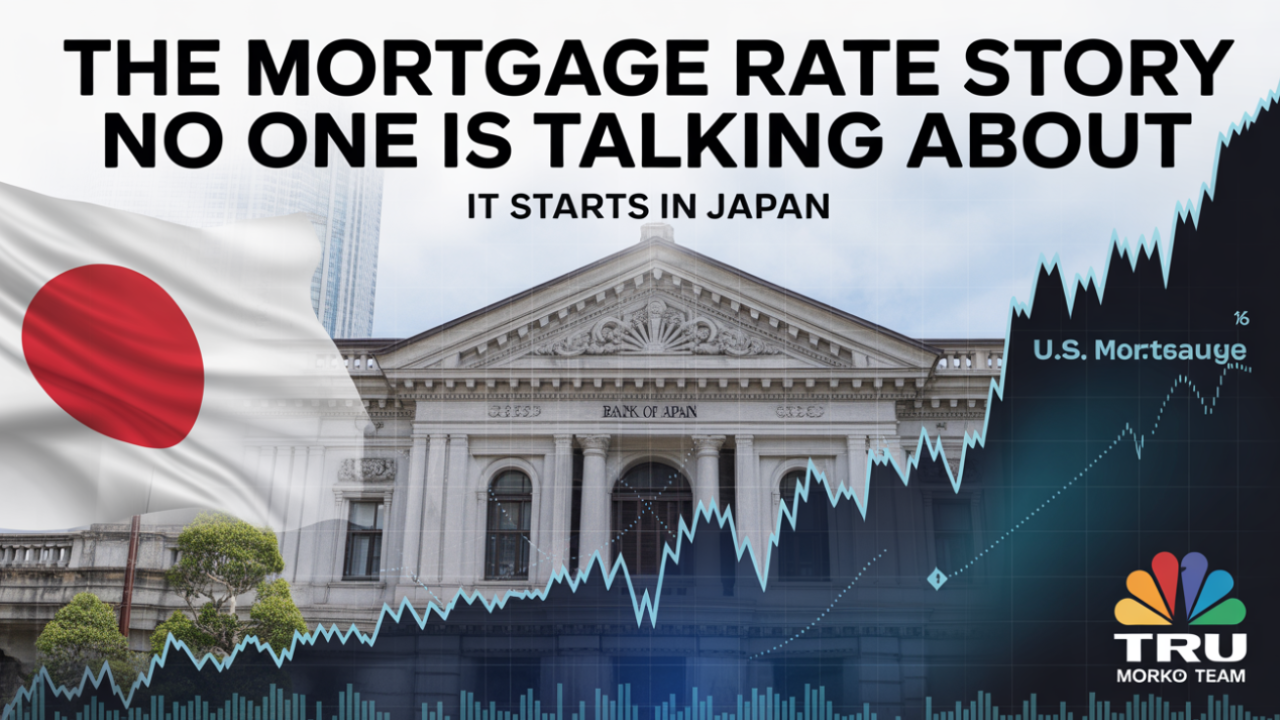
This is a step‑by‑step walkthrough you can use with clients to explain how a decision on interest rates in Japan can ultimately affect 10‑year Treasuries and U.S. mortgage rates.
Simple version: When Japan raises rates, it can unwind a global “carry trade” that pulls money out of U.S. bonds — and that can push long‑term yields and mortgage rates higher or keep them from falling as much as people expect.
1. Start Here: Japan’s Interest Rates & the Bank of Japan
For more than 20 years, Japan has had some of the lowest interest rates in the world. The Bank of Japan (BOJ) kept short‑term rates near zero (and even negative at times) and also bought huge amounts of Japanese government bonds to keep long‑term yields extremely low.
Why this matters:
- Japan became the world’s “cheap borrowing hub.”
- Global investors could borrow in yen at very low cost.
- That cheap funding helped fuel investments all over the world, including in U.S. bonds.
Client-friendly line
“Japan has been the place where big investors could borrow money almost for free for decades.”
2. From Low Japanese Rates to the “Yen Carry Trade”
Once you’ve explained Japan’s ultra‑low rates, you can introduce the idea of the carry trade. This is the bridge between Japan’s policy and U.S. markets.
What is the Yen Carry Trade?
- Step 1: Borrow in yen where interest rates are extremely low.
- Step 2: Convert those yen into U.S. dollars or other currencies.
- Step 3: Invest the money in higher‑yielding assets (like U.S. Treasuries, mortgage‑backed securities, corporate bonds, or stocks).
- Step 4: Pocket the difference between the low borrowing cost and the higher investment return. That difference is the “carry.”
Client-friendly line
“Big investors borrow cheap in Japan, move that money into dollars, buy higher‑yielding investments here, and try to keep the profit in between.”
Why it matters
The Yen Carry Trade created a steady demand for
U.S. bonds and mortgage‑backed securities because investors were constantly looking for places to park that borrowed money at higher yields.
The hidden effect
That demand helped keep
long‑term interest rates (including mortgage rates) lower than they might have been if that Japanese‑funded money wasn’t flowing into U.S. markets.
3. The Turning Point: BOJ Raises Interest Rates
Now move to the current environment. The Bank of Japan is raising rates and tightening policy after years of being extremely loose.
When BOJ raises rates:
- Borrowing in yen becomes more expensive.
- The profit from the carry trade shrinks or even disappears.
- Investors start to question whether the trade is still worth the risk.
Client-friendly line
“If Japan raises rates enough, that ‘almost free money’ isn’t free anymore — and the trade starts to break down.”
4. When the Carry Trade Unwinds
As the carry trade becomes less attractive, investors begin to unwind their positions. This is where we see the direct impact on global bond markets.
What does “unwind” actually mean?
- Investors sell the foreign assets they bought (U.S. Treasuries, mortgage‑backed securities, etc.).
- They convert the proceeds back into yen.
- They use those yen to pay back the loans they took out in Japan.
Flow of the unwind
1
BOJ raises rates → Yen borrowing becomes more expensive.
2
Carry trade profits shrink → Investors start closing trades.
3
They sell U.S. bonds and mortgage‑backed securities.
4
They buy yen to pay back their Japanese loans.
5
Bond selling pushes global long‑term yields higher.
5. How This Hits the Long End of the Bond Market
The carry trade money doesn’t usually go into short‑term instruments. It tends to chase long‑duration assets — that’s where the yield pickup is.
So when the trade unwinds, selling pressure hits things like:
- 10‑year and 30‑year U.S. Treasuries
- Long‑dated corporate bonds
- Mortgage‑backed securities (MBS)
When there is heavy selling in those markets, prices of those bonds drop, and their yields rise. That’s the key connection to mortgage rates.
Client-friendly line
“When investors unwind this Japan trade, they sell the same kinds of bonds that help set your mortgage rate — and that pushes long‑term interest rates up.”
6. From Global Bonds to Your Mortgage Rate
U.S. mortgage rates are heavily influenced by two things:
- The yield on the 10‑year U.S. Treasury (the key benchmark for long‑term rates).
- The spread between mortgage‑backed securities and Treasuries (how much extra return investors demand to hold mortgages instead of Treasuries).
When the carry trade unwinds:
- Selling of Treasuries tends to push the 10‑year yield higher.
- Volatility can cause MBS spreads to widen as investors demand more compensation for risk.
Both of those forces put upward pressure on mortgage rates or at least keep them from falling as much as the average person might expect based only on U.S. inflation or Federal Reserve policy.
7. Dan Frio One‑Breath Explanation for Clients
“Japan kept rates near zero for decades, so big investors borrowed cheap yen and bought higher‑yielding bonds here in the U.S. — that’s the ‘yen carry trade.’ When the Bank of Japan raises rates, that trade stops working, money gets pulled out of U.S. Treasuries and mortgage‑backed securities, and that can push long‑term yields and mortgage rates higher or keep them from dropping as much as we’d like.”
8. What This Means for Homeowners & Homebuyers
Here’s how you can connect the dots for a client:
- The Federal Reserve is not the only player that matters for mortgage rates.
- Global central banks — especially the Bank of Japan — can move long‑term yields through the carry trade.
- Even if U.S. inflation is improving, global forces might keep mortgage rates “stickier” than headlines suggest.
For a homeowner or buyer, the takeaway is: global money flows and foreign central banks can affect what you qualify for on a home loan, even if we never change our income or credit score here at home.
Bottom Line for Clients:
A rate move in Japan can ripple through global markets, unwind a major trading strategy, push long‑term bond yields higher, and ultimately impact the mortgage rate you see on your screen. That’s why we watch not just the Federal Reserve, but also the Bank of Japan and other central banks around the world.