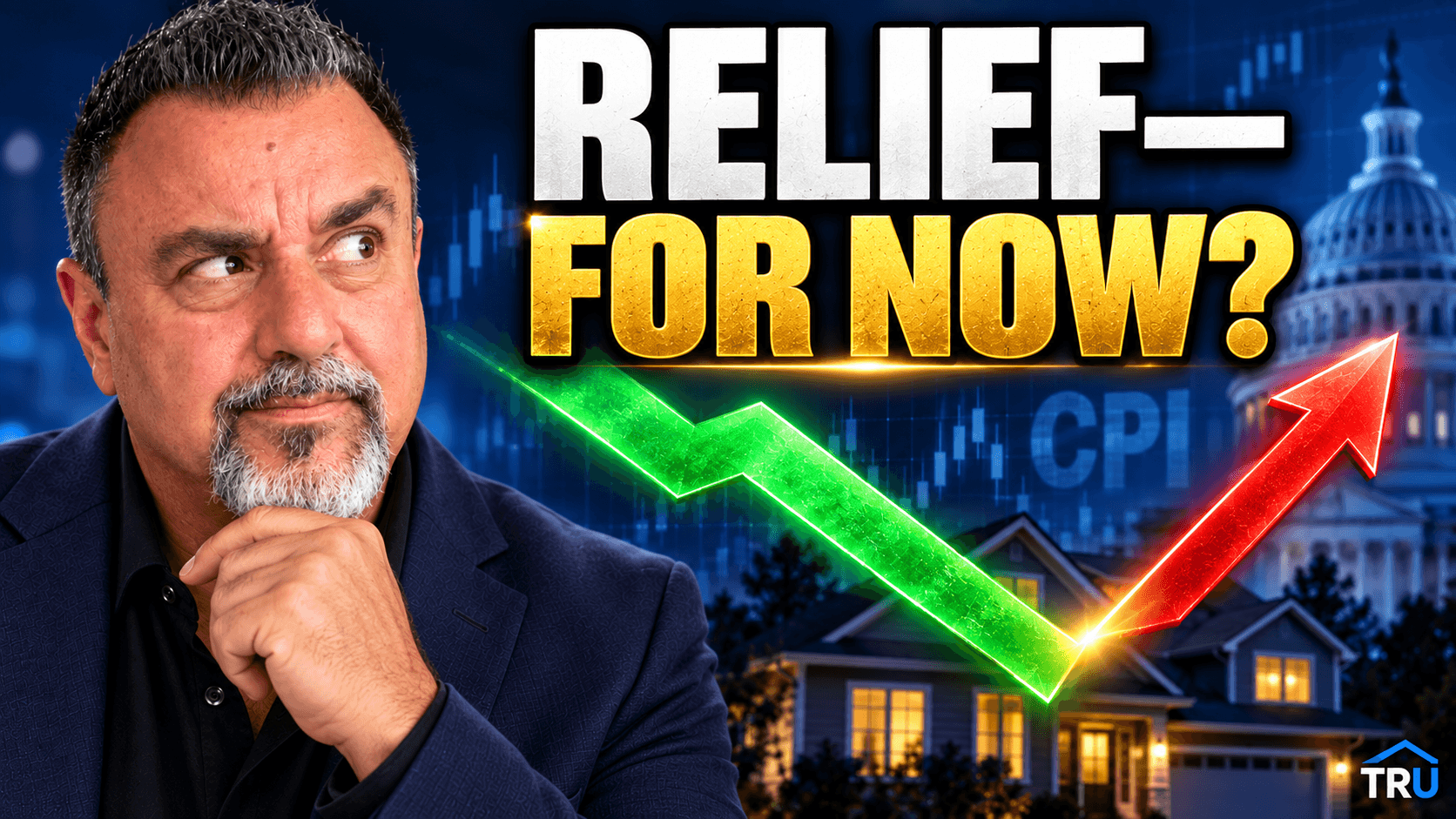
Mortgage rates received some welcome relief after today’s Consumer Price Index report—but this is not an “all clear” signal. Mortgage-backed securities improved because inflation was close to expectations and annual core inflation eased slightly. However, inflation remains above the Federal Reserve’s target, and the probability of a rate hike next week increased.
Today’s CPI numbers
Headline inflation accelerated from July as gasoline and energy costs increased. Core inflation—which removes food and energy—improved slightly on an annual basis but still rose 0.3% during August. That gave bonds some relief, but it did not prove that inflation is returning comfortably to the Fed’s 2% goal.
Is a Fed rate hike guaranteed?
No. After CPI, interest-rate futures placed the probability of a September rate hike near 87%, up from 72% the previous day. That is a strong expectation—not 100% certainty.
The Fed must weigh the whole economy:
- Inflation remains above target.
- Producer prices increased 0.4% in August.
- Payrolls increased by 162,000 and unemployment held at 4.1%.
- Oil recently moved back above $100 per barrel.
- The economy has not weakened enough to force the Fed to support it with lower rates.
Why oil and Treasury debt matter
Higher oil prices affect far more than the gas pump. They raise transportation, shipping, airline, utility, food and manufacturing costs. If oil remains elevated, those costs can spread through the economy and keep inflation higher for longer.
At the same time, the federal government must sell large amounts of Treasury debt. Investors may demand higher yields to absorb that supply. Mortgage-backed securities compete with Treasuries for investor money, so higher Treasury yields can place upward pressure on mortgage rates.
This week’s three-year, 10-year and 30-year Treasury auctions attracted strong demand. The 30-year auction was especially impressive: primary dealers absorbed only about 2.2% of the bonds, a record low. But investors still demanded historically high yields. Buyers want Treasury debt—they simply want greater compensation for inflation, deficits and long-term risk.
What this means for buyers and Realtors
Rates could improve if…
Inflation cools, oil declines, economic data weakens or the 10-year Treasury yield moves lower.
Rates could rise if…
The Fed signals additional hikes, oil stays elevated, inflation runs hot or the 10-year Treasury breaks decisively above 5%.
Buyers under contract should ask whether today’s relief creates a useful locking opportunity. Waiting for the perfect rate is risky with a Federal Reserve announcement approaching.
Ask your lender to show you:
- Your payment at today’s available rate.
- Your payment and purchasing power if rates rise 0.25%.
- The cost and break-even period for discount points.
- Whether a float-down option is available.
Today’s improvement is best described as relief—not confirmation of a lasting decline in mortgage rates.
The bottom line
Today’s CPI report was good enough to spark a mortgage-bond rally, but not good enough to eliminate the possibility of a Fed rate hike. Buyers should remain fully preapproved, focus on a payment they can comfortably afford and establish a lock strategy with their lender before the next major market event.
This article is for educational purposes only. Mortgage rates and loan terms vary by borrower, lender, property, loan program and market conditions. This is not a commitment to lend or a guarantee of any interest rate.