The Rate Update with Dan Frio · Market Report
The housing market is effectively on hold for meaningful rate relief. The Fed is not preparing to cut; it is signaling at least one more hike and a long period of restrictive policy. Mortgage rates can still fall before the Fed cuts—but that requires cooler inflation, less energy pressure, lower Treasury yields and stronger demand for mortgage-backed securities.
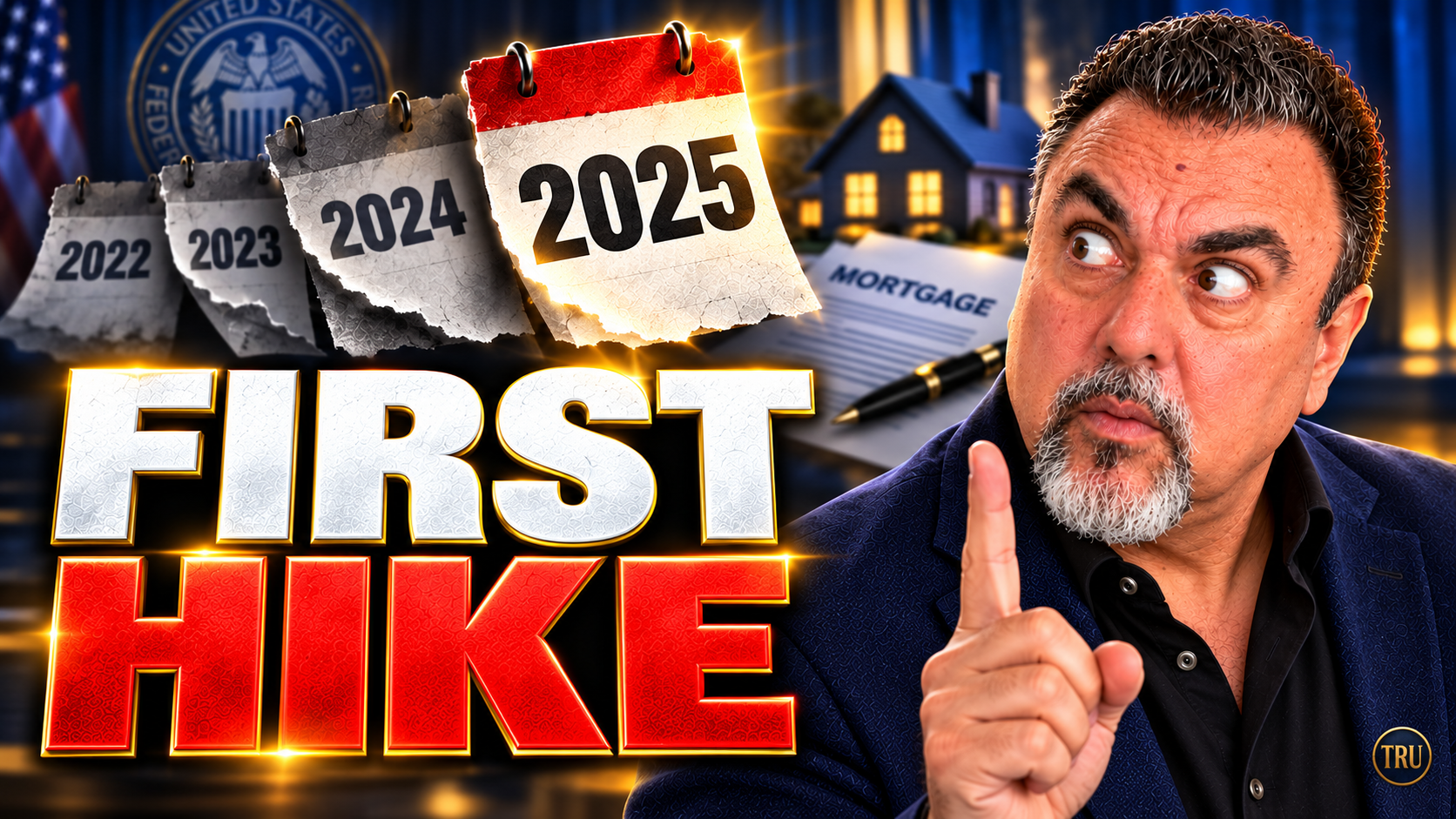
The Federal Open Market Committee voted 12–0 to raise the federal funds target range by 0.25 percentage point, to 3.75%–4.00%. It was the first Fed rate increase in more than three years.
Those were the two economic events that mattered most this week: the Fed’s actual rate decision and the Summary of Economic Projections (SEP). The hike itself was largely priced in. The surprise was the strength of the forward-looking message. The Fed described economic growth as solid, spending as resilient, productivity as strong and capital investment as robust. With employment still stable, policymakers believe they have room to concentrate on inflation.
The market entered the meeting expecting a quarter-point hike. What it did not fully expect was such a broad hawkish majority in the Fed’s updated projections. Of the 18 participants who submitted a 2026 year-end rate projection, 16 placed their dot at 4.125% or higher. That means nearly nine out of ten participants saw at least one more hike after yesterday’s move.
Each dot represents one FOMC participant’s projection—not a formal vote.
The distribution was more important than the median alone. It showed that only two participants thought yesterday’s hike would be enough, while 12 expected one more increase and four expected two more. In other words, the center of gravity was not “pause and prepare to cut.” It was “hike again and hold rates higher for longer.”
Chair Warsh’s press-conference tone reinforced that reading. He emphasized that inflation remains elevated, highlighted the economy’s resilience and repeatedly returned to price stability. The statement’s unusually direct promise that the Committee “will deliver price stability” made the dots feel less like a distant forecast and more like a credible warning.
The federal funds rate is an overnight bank-lending rate. It directly influences short-term and prime-based borrowing costs. A 30-year fixed mortgage is priced through the long-term bond market.
Mortgage rates follow mortgage-backed securities. MBS pricing is heavily influenced by the 10-year Treasury, inflation expectations, market volatility, prepayment risk and investor demand. When MBS prices fall, mortgage rates generally rise; when MBS prices improve, lenders can generally offer better pricing.
This illustration uses a $350,000, 30-year fixed mortgage and compares principal and interest only. Taxes, insurance, mortgage insurance, HOA charges, points and closing costs are excluded.
| Mortgage rate | Monthly P&I | Increase vs. 5.99% | Loan supported by $2,096 payment | Buying-power loss |
|---|---|---|---|---|
| 5.99% | $2,096 | Baseline | $350,000 | Baseline |
| 6.76% | $2,272 | +$176/month | $322,855 | −$27,145 |
| 7.17% | $2,369 | +$272/month | $309,738 | −$40,262 |
| 7.50% | $2,447 | +$351/month | $299,790 | −$50,210 |
Buying power refers to loan principal, not the full purchase price. Actual rates and payments vary by borrower, product, credit profile, down payment, points and market timing.
These are The Rate Update’s probability-weighted scenarios based on the SEP, the dot distribution, inflation risks and the Fed’s current tone—not guarantees or official Fed probabilities.
The Fed evaluates incoming inflation and energy data, then raises rates once more by year-end.
Energy pressure persists and spreads into core inflation, keeping the Fed more aggressive.
Energy, inflation and growth cool enough for the Fed to stop after September.
The Fed can pause and mortgage rates can stay high. The Fed can hike and mortgage rates can still fall. For buyers and Realtors, the daily scorecard is now inflation, energy, the 10-year Treasury and mortgage-backed securities.
Run the payment, cash-to-close and buying-power numbers for your actual scenario. One application. One credit report. Compare 30+ lenders.
Federal Reserve: September 16 FOMC statement · Federal Reserve: September economic projections · Reuters: post-Fed market reaction · Reuters: September 17 market follow-through · U.S. Census Bureau: August retail sales · U.S. Census Bureau: residential construction · U.S. Labor Department: weekly claims · Mortgage News Daily: mortgage and MBS context.