Here is the answer in one sentence: the Federal Reserve sets an overnight bank rate; a 30-year fixed mortgage is priced in the long-term bond market, where investors react every day to expected inflation, economic growth, Treasury supply, volatility and risk.
Two rates, two different markets
The federal funds rate is the target for overnight borrowing between banks. It has a strong and fairly direct effect on short-term products such as prime-linked HELOCs, credit cards, money-market yields and some adjustable-rate loans.
A 30-year fixed mortgage must be attractive to investors for many years. Its pricing begins with longer-term Treasury yields—especially the 10-year—and then adds a mortgage-backed-securities spread for prepayment risk, interest-rate volatility, liquidity, servicing and lender costs. That is why “the Fed cut, so mortgages should fall today” is an unreliable rule.
The Fed’s two-year decision timeline
From September 2024 through July 2026, the Fed lowered its target from 5.25%–5.50% to 3.50%–3.75%. Notice what happened around the meetings: after the first large cut, the mortgage average was 6.09%; by January 2025—after three cuts totaling a full percentage point—it was 6.95%.
| Decision date | Action | Change | New Fed target | Nearest weekly 30-year average |
|---|---|---|---|---|
| Sep. 18, 2024 | CUT | −0.50% | 4.75%–5.00% | 6.09% |
| Nov. 7, 2024 | CUT | −0.25% | 4.50%–4.75% | 6.79% |
| Dec. 18, 2024 | CUT | −0.25% | 4.25%–4.50% | 6.72% |
| Jan. 29, 2025 | HOLD | — | 4.25%–4.50% | 6.95% |
| Mar. 19, 2025 | HOLD | — | 4.25%–4.50% | 6.67% |
| May 7, 2025 | HOLD | — | 4.25%–4.50% | 6.76% |
| Jun. 18, 2025 | HOLD | — | 4.25%–4.50% | 6.81% |
| Jul. 30, 2025 | HOLD | — | 4.25%–4.50% | 6.72% |
| Sep. 17, 2025 | CUT | −0.25% | 4.00%–4.25% | 6.26% |
| Oct. 29, 2025 | CUT | −0.25% | 3.75%–4.00% | 6.17% |
| Dec. 10, 2025 | CUT | −0.25% | 3.50%–3.75% | 6.22% |
| Jan. 28, 2026 | HOLD | — | 3.50%–3.75% | 6.10% |
| Mar. 18, 2026 | HOLD | — | 3.50%–3.75% | 6.22% |
| Apr. 29, 2026 | HOLD | — | 3.50%–3.75% | 6.30% |
| Jun. 17, 2026 | HOLD | — | 3.50%–3.75% | 6.47% |
| Jul. 29, 2026 | HOLD | — | 3.50%–3.75% | 6.66% |
The September 15–16, 2026 FOMC meeting was underway when this report was prepared; no decision had yet been released. “Nearest weekly average” is the closest Freddie Mac survey observation, not a same-day lock quote.
Why the Iran war pushed mortgage rates up without a Fed hike
The conflict began on February 28, 2026. Immediately beforehand, mortgage rates were approximately 5.90%. The market quickly had to price the risk of disrupted energy flows through the Strait of Hormuz. Oil is not only gasoline: it affects diesel, air travel, shipping, plastics, fertilizer and the cost of moving nearly everything. Higher energy costs can keep inflation above target longer.
Bond investors then demand a higher yield to hold long-term debt whose future dollars may buy less. From late February to September 11, the 10-year Treasury climbed roughly 0.99 percentage point. Mortgage-backed securities had to compete with that higher risk-free yield, so lenders repriced mortgages upward—even while the Fed stood still.
The six forces that move mortgage rates every day
1. Inflation and inflation expectations
Hot CPI, PCE, wages or oil usually pressure bonds and mortgage rates higher. Cooling inflation can do the reverse.
2. The 10-year Treasury
It is the most useful public benchmark for fixed mortgage direction. It reflects the expected path of the economy and rates over years—not just today’s Fed setting.
3. Jobs and economic growth
Strong data can mean inflation stays persistent and the Fed remains restrictive. Weak data can pull long yields lower if recession risk dominates.
4. Treasury supply and global demand
Heavy government borrowing, weak auctions or reduced foreign demand can require higher yields to attract buyers.
5. Mortgage-bond spread
Mortgages trade above Treasuries because investors face prepayment, duration and liquidity risk. Volatility can widen that spread.
6. What was already expected
Markets price likely Fed moves before the meeting. If a cut is fully expected, the announcement may do little—or rates may rise if the Fed’s outlook is more inflationary than expected.
A real payment example
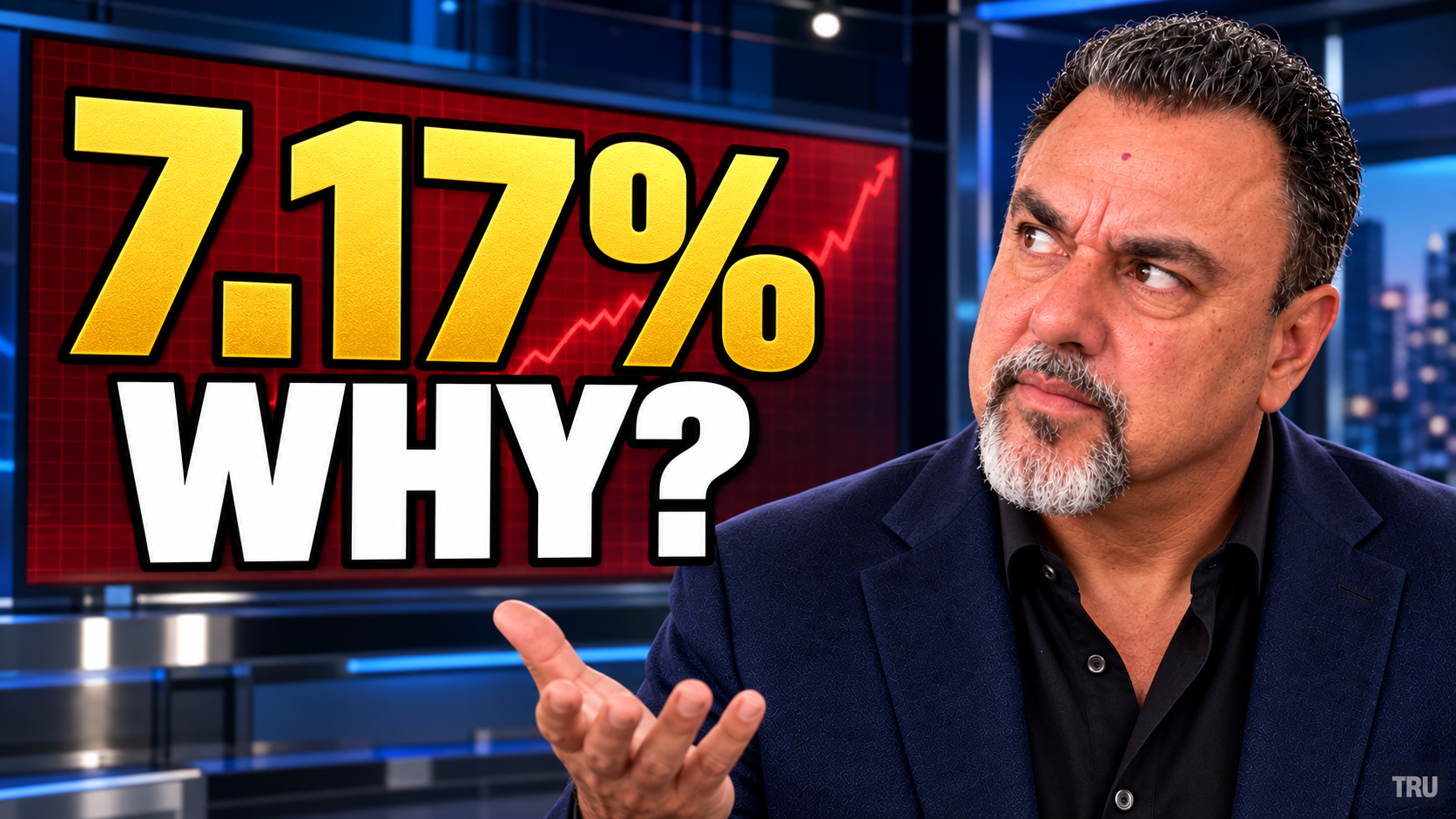
On a $350,000, 30-year fixed mortgage, principal and interest is about $2,076 per month at 5.90% versus $2,369 at 7.17%. That is approximately $293 more every month—or more than $3,500 per year. To keep the original payment at 7.17%, the loan amount would fall to about $306,750—a loss of roughly $43,250 in borrowing power.
What buyers and Realtors should watch
Do not watch only the Fed headline. Watch the 10-year Treasury, mortgage-backed securities, oil, CPI/PCE, jobs data, Treasury auctions and the Fed’s forward guidance. The meeting decision matters most when it changes the market’s expectations—not simply because the word “cut” or “hike” appears in the headline.
Bottom line: the Fed influences mortgage rates, but it does not set them. Mortgage rates can rise during a Fed hold or cut when the bond market sees more inflation, stronger growth, heavier debt supply or greater risk ahead.