Mortgage rates are below their 2023 peak. Home-price growth has cooled. More homes are reaching the market. So why does buying a house still feel out of reach for so many Americans? Because you don't buy a home price — you buy the payment.
That payment includes far more than principal and interest. Property taxes, homeowners insurance, mortgage insurance, HOA fees, and maintenance can substantially change what a buyer can actually afford. Let's break down where the money is really going.
Each number moves affordability differently — but together, they explain why buyers remain under so much pressure.
The national median existing-home price was approximately $386,300 in 2022 — an all-time high at the time. By August 2026, National Association of REALTORS® data put the median at $429,100, an increase of roughly 11.1%.
That's considerably slower than the pandemic-era surge, but it still means today's buyer needs a larger down payment, a larger mortgage, more income to qualify, and more money for property taxes and insurance. Home prices aren't the entire affordability problem — but they're keeping the starting point elevated.
The average 30-year fixed mortgage rate was approximately 5.34% in 2022. Rates later peaked at 7.79% in October 2023, according to Freddie Mac (some daily measurements briefly moved above 8%). As of September 10, 2026, Freddie Mac's weekly average was 6.76%.
Rates are no longer setting new highs, but the earlier increase has never been fully reversed. That higher financing cost remains embedded in every new buyer's payment.
Assume a buyer purchased the representative median-priced home with 20% down:
| Payment comparison | 2022 | August 2026 |
|---|---|---|
| Home price | $386,300 | $429,100 |
| Down payment (20%) | $77,260 | $85,820 |
| Mortgage amount | $309,040 | $343,280 |
| Mortgage rate | 5.34% | 6.76% |
| Principal & interest | $1,724 | $2,229 |
That increase came from two directions: the buyer borrowed more because the home cost more, and paid a higher interest rate on that larger mortgage. This is why mortgage rates remain the largest national affordability driver — even after rates stopped climbing to new highs.
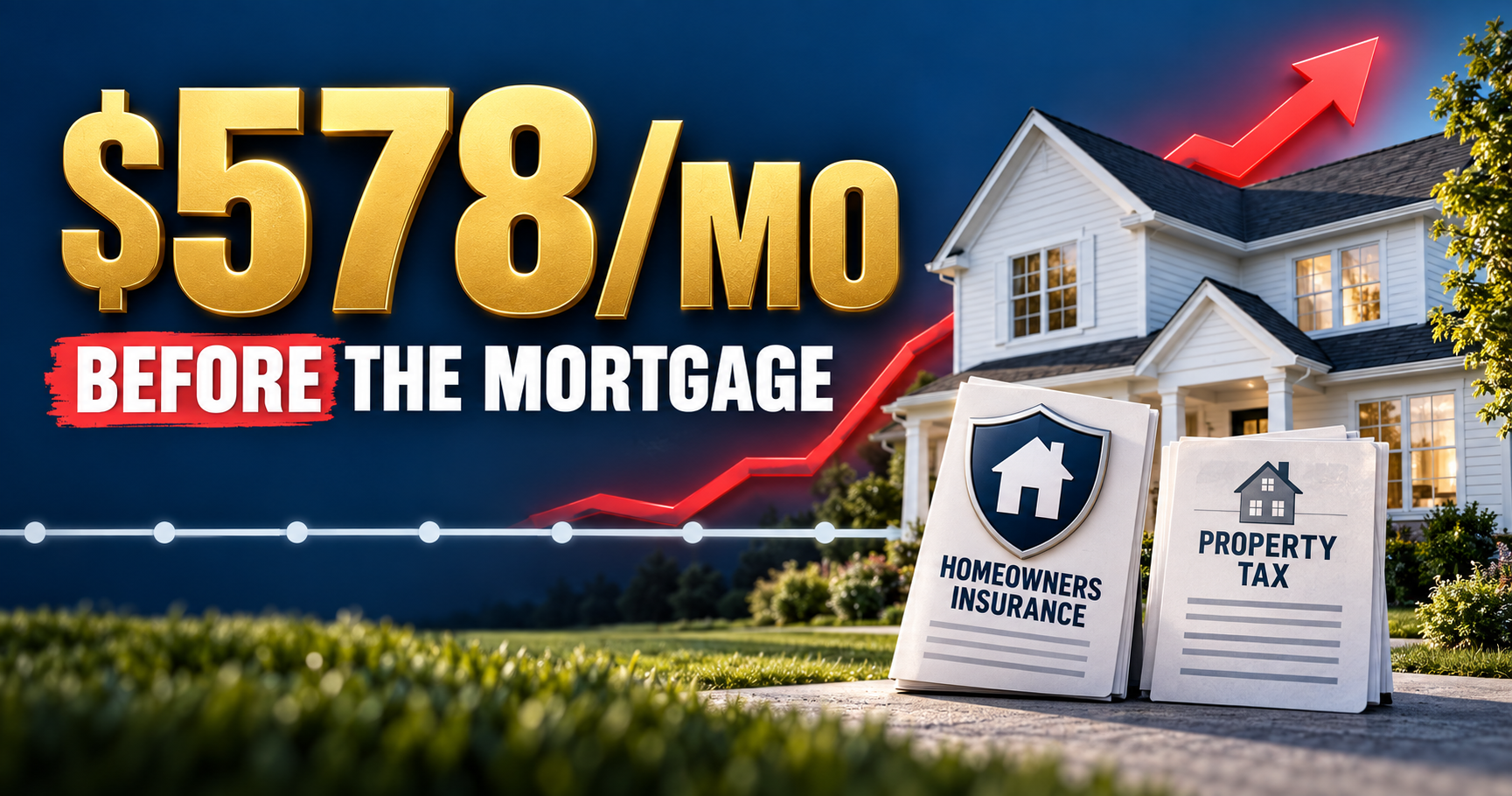
The average single-family mortgage holder now pays approximately $209 per month for property insurance, according to ICE's September 2026 Mortgage Monitor — about $2,508 per year.
The pace of growth has slowed, but insurance costs have not declined. Buyers are still absorbing increases caused by rebuilding costs, coverage requirements, weather exposure, and changes within state insurance markets.
ATTOM reports that the average property-tax bill on a single-family home increased from $3,901 in 2022 to $4,427 in 2025, the latest complete annual figure — a 13.5% increase in three years.
| Property taxes | Annual cost | Monthly equivalent |
|---|---|---|
| 2022 average | $3,901 | $325 |
| 2025 average | $4,427 | $369 |
| Increase | $526 | $44 |
Property taxes can vary enormously between states, counties and individual properties. Buyers should never rely exclusively on a national estimate.
Illinois' rate runs roughly twice the national average (ATTOM, 2025 analysis). For buyers in Chicago's suburbs, Kane County and other high-tax communities, property taxes can reduce purchasing power by tens of thousands of dollars. A buyer may qualify for the mortgage — but not for the mortgage plus the actual property-tax bill.
Using the current national figures, the representative monthly payment looks approximately like this:
That estimate assumes 20% down and does not include:
Depending on the property, the real monthly cost could easily exceed $3,000.
There isn't one single cause.
Higher mortgage rates created the payment shock. Elevated home prices preserved it. Rising taxes and insurance continue making it worse.
This is why simply waiting for a housing crash may not produce the result buyers expect. A lower home price doesn't guarantee a lower payment if mortgage rates, taxes and insurance continue rising.
Consider a $350,000, 30-year mortgage:
That could restore meaningful purchasing power without requiring home prices to collapse. But buyers should remember that lower rates can also bring more buyers back into the market, potentially increasing competition for desirable homes.
Set your budget using the complete monthly payment — not the online listing price.
Ask whether the property could be reassessed after the sale. The current owner's bill may not represent what you'll pay.
Don't wait until the final week before closing. The property's roof, age, location and claims history can materially affect the premium.
A small improvement in the mortgage rate can produce meaningful monthly and long-term savings.
The maximum payment a lender approves is not necessarily the payment you should choose.
Housing affordability is about much more than the home's asking price. Today's buyer is dealing with home prices that remain elevated, mortgage rates near 7%, record homeowners-insurance premiums, rising property taxes, and higher maintenance and replacement costs.
That doesn't mean buying a home is always the wrong decision. It means every buyer needs a complete, property-specific payment analysis before deciding what is truly affordable.
If you're considering buying, refinancing, or helping a client evaluate a property, we can calculate the complete payment using current mortgage options, the property's actual taxes, a realistic insurance estimate, mortgage insurance when required, HOA fees, and your down payment and financial goals.
One application. One credit report. Compare 30+ lenders.