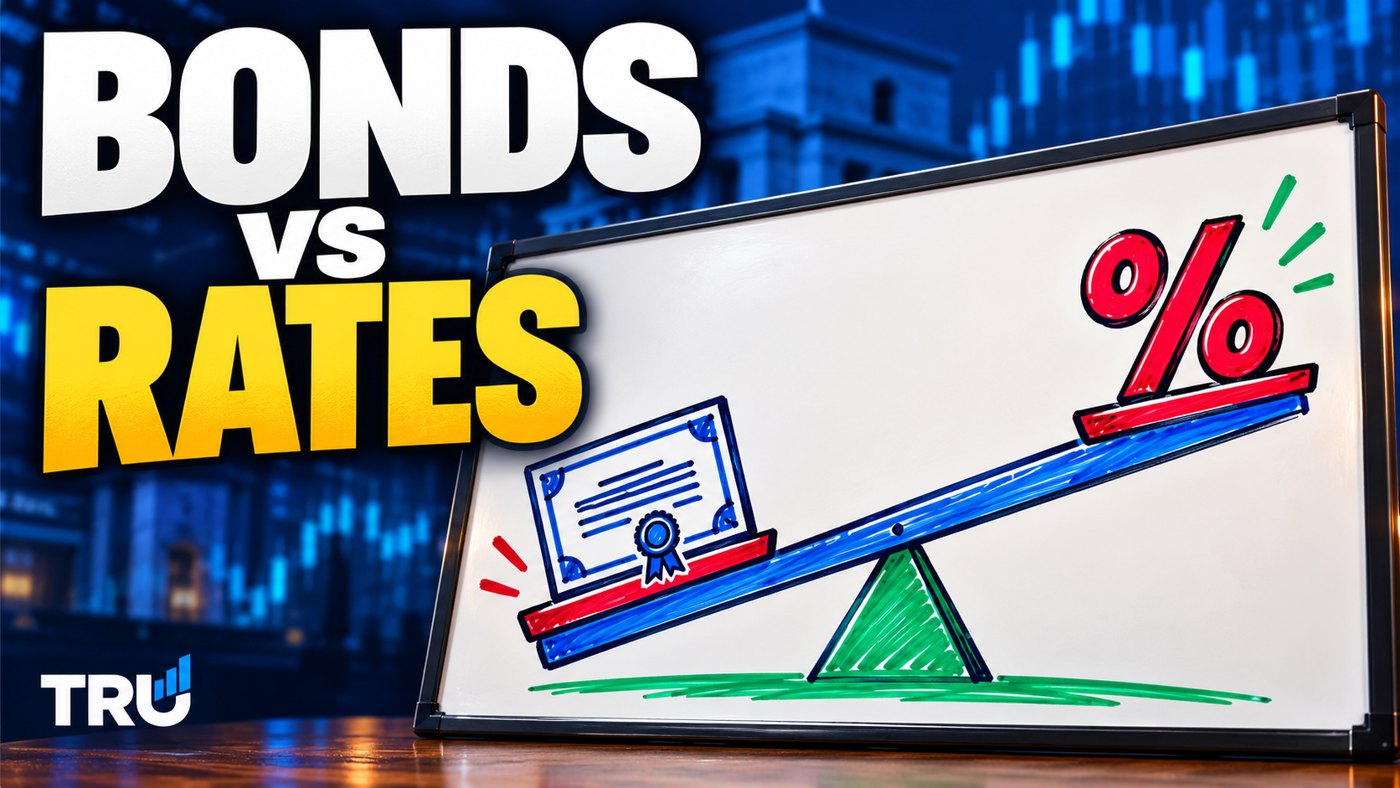
Every mortgage rate you see is set in the bond market, not at the Fed and not at your bank. Once you understand one simple rule, the bond seesaw, the daily moves in mortgage rates start to make sense.
A bond is an IOU. You hand over money today, and the borrower promises to pay you back on a set date, usually with interest along the way. The U.S. Treasury borrows this way, corporations borrow this way, and your mortgage ends up financed this way too.
Once a bond is issued, it trades in the market every day. Its price moves up and down with demand. That price is what drives the yield, and the yield is what drives your rate.
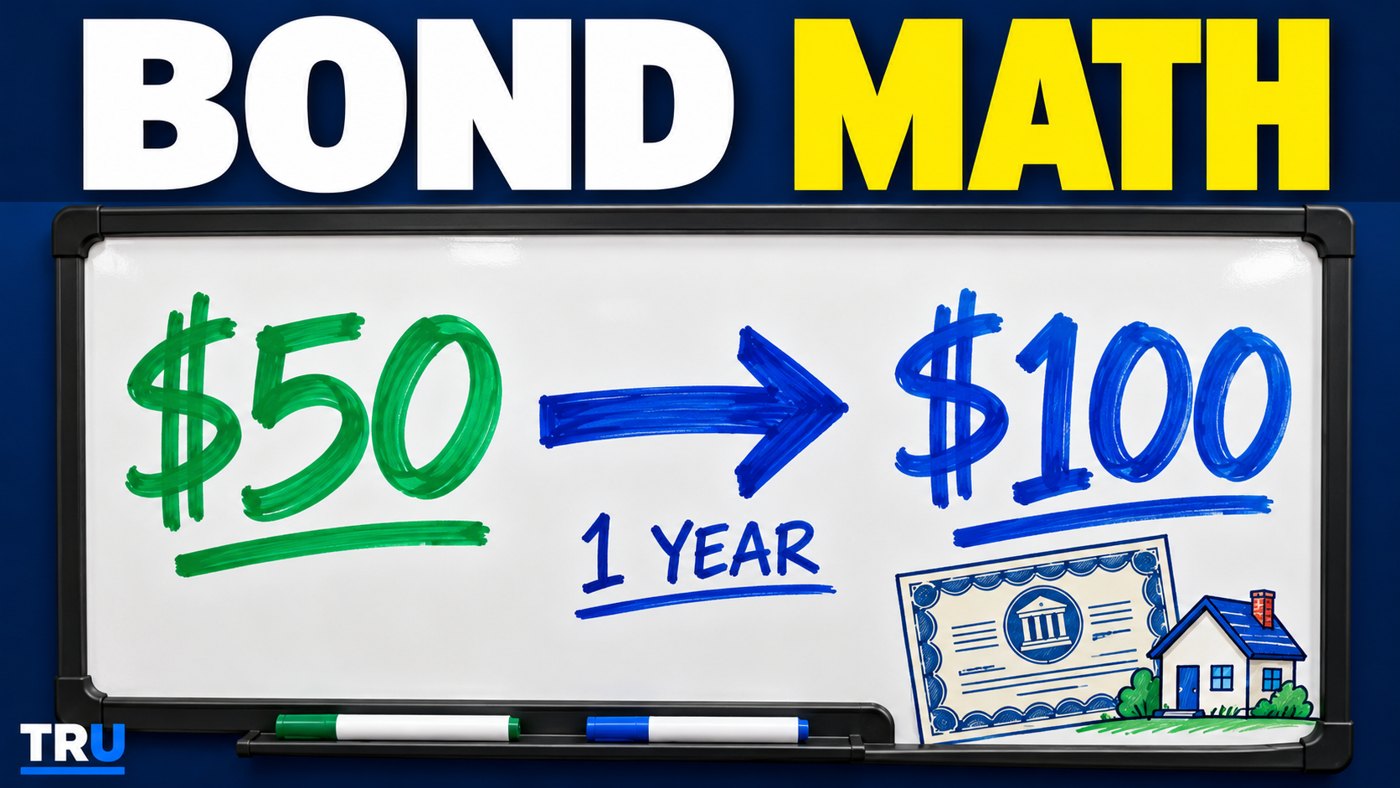
Picture a bond that pays back $100 in one year. If you can buy it for $50, you double your money: a 100% yield. If you pay the full $100, you earn nothing: a 0% yield. Same bond, same payback. The only thing that changed was the price you paid.
That is the whole seesaw. Price down, yield up. Price up, yield down. Real bonds also pay interest (a coupon), but the rule never changes.
+$2.44T in 12 months. Interest now tops $1T a year. Debt limit $41.1T.
AI bonds forecast for 2026, double 2025. $4.1T of data-center spending planned through 2030.
Worldwide: a record $29T in new bonds in 2026.
When you take out a mortgage, your loan is usually pooled with thousands of others and sold to investors as a mortgage-backed security (MBS). Those investors are the real source of the money. The rate you are quoted has to give them a competitive yield.
So when investors pay less for MBS, the yield they demand goes up, and lenders reprice their rate sheets higher, sometimes more than once in a day. When investors bid MBS prices up, lenders can offer lower rates. Mortgage rates also tend to move with the 10-year Treasury yield, because both compete for the same long-term investors.

Investors only have so much money. When governments run large deficits and tech companies borrow heavily to build AI data centers, the market gets flooded with new bonds. To attract buyers, sellers have to accept lower prices. Lower prices mean higher yields, and mortgage bonds have to keep up to compete. That is how borrowing in Washington and Silicon Valley shows up in a home buyer's payment.
| What happens in the bond market | Bond prices | Yields | Mortgage rates |
|---|---|---|---|
| Inflation runs hot | Fall | Rise | Tend to rise |
| Heavy government or corporate borrowing | Fall | Rise | Tend to rise |
| Investors seek safety (stock selloff) | Rise | Fall | Can ease |
| Economy and jobs weaken | Rise | Fall | Can ease |
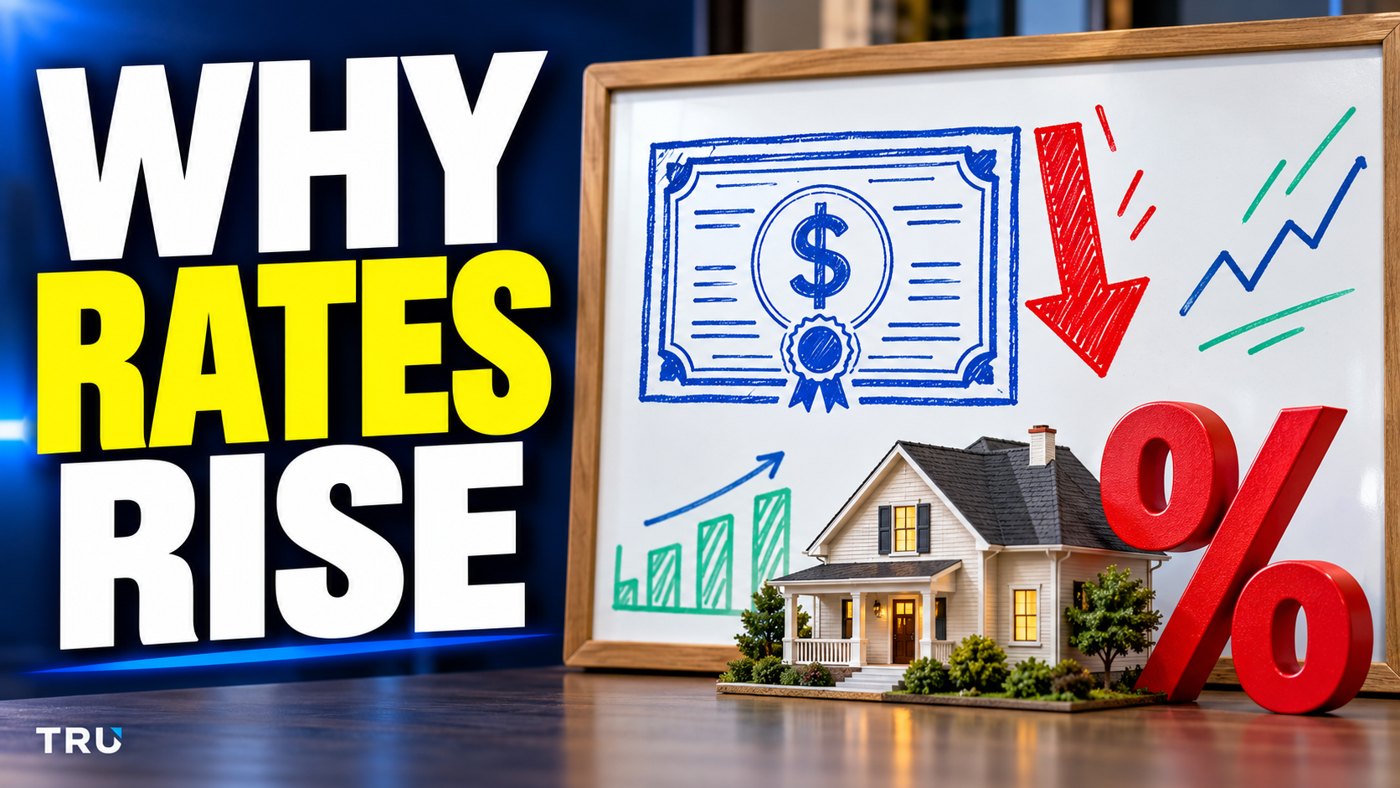
The Federal Reserve sets a short-term overnight rate. Mortgage rates are long-term rates set by bond investors. They often move together, but not always. If investors expect inflation to stay high or see a flood of new debt coming, long-term yields can climb even while the Fed holds steady. And when fear hits the stock market, investors often pile into bonds, which can pull yields and mortgage rates down even after a hot inflation report.
Buyers: rates can change between the morning and the afternoon. Watch the bond market, not just Fed headlines, and know your payment before you shop.
Homeowners: the drop you are waiting for will show up in bond prices first. A rate alert catches it for you so you don't have to watch every day.
Set a free Rate Watch alert, or send your Loan Estimate for a free TRU Test review. One application. One credit pull. 30+ mortgage lenders.
Set My Rate AlertGet the Free TRU TestA bond is a loan to a government or company. The borrower pays you back on a set date, usually with interest. Bonds trade every day, and their prices change with demand.
The payback is fixed. If you pay less for the same payback, your return (yield) is higher. If you pay more, your return is lower.
Mortgage-backed securities (MBS) set mortgage rates most directly. The 10-year Treasury yield is a close guide because both compete for long-term investors.
Yes. Mortgage rates come from the bond market. Inflation expectations, government borrowing and investor demand can push long-term yields up while the Fed holds steady.
More borrowing means more bonds for sale. To attract buyers, prices fall and yields rise, which can push mortgage rates higher.
Education only, not investment advice. This article is not a commitment to lend; rates, programs and terms change without notice and depend on credit, property and other factors.
Dan Frio | NMLS #246527 | PBT Bancorp | NMLS #257781 · Mortgage products are originated by PBT Bancorp, NMLS #257781. 524 Main St, Hazard, KY 41701. Equal Housing Lender.