The next twelve days may be the most important stretch of the fall mortgage market. The August employment report arrives today. August inflation arrives September 11. Then the Federal Reserve announces its decision on September 16.
That calendar matters because Federal Reserve Governor Christopher Waller has made the inflation report central to his decision. If inflation continues to cool, he said he is willing to support holding the policy rate steady. If inflation comes in hot, he would consider a hike. He also warned that policy is only slightly restrictive, so it may not take much of an inflation acceleration to push him toward tighter policy.
The three-report relay race
Why the jobs report still matters if inflation is the deciding vote
The Fed has two jobs: maximum employment and stable prices. A weak employment report can make officials more cautious about adding pressure to the economy. A strong labor report—especially with faster wage growth—can give the Fed more room to focus on inflation.
Do not watch only the headline payroll number. Watch four pieces together: new jobs, the unemployment rate, average hourly earnings, and revisions to prior months. A seemingly strong headline can look very different after revisions, while hot wage growth can keep inflation concerns alive even if hiring slows.
Waller may be the swing vote—but CPI is the swing data
Calling any one official the “deciding vote” before the meeting is too strong; the FOMC is a committee and Chair Kevin Warsh can likely assemble a majority for either a hold or a hike. But Waller's public position makes him a potential swing vote: continued disinflation points him toward a hold, while a reversal could move him toward a hike.
Recent progress is real but incomplete. Waller noted that three-month core inflation had declined from a 4.76% annualized pace in February to 3.05% through July—encouraging movement, but still inconsistent with the Fed's 2% goal.
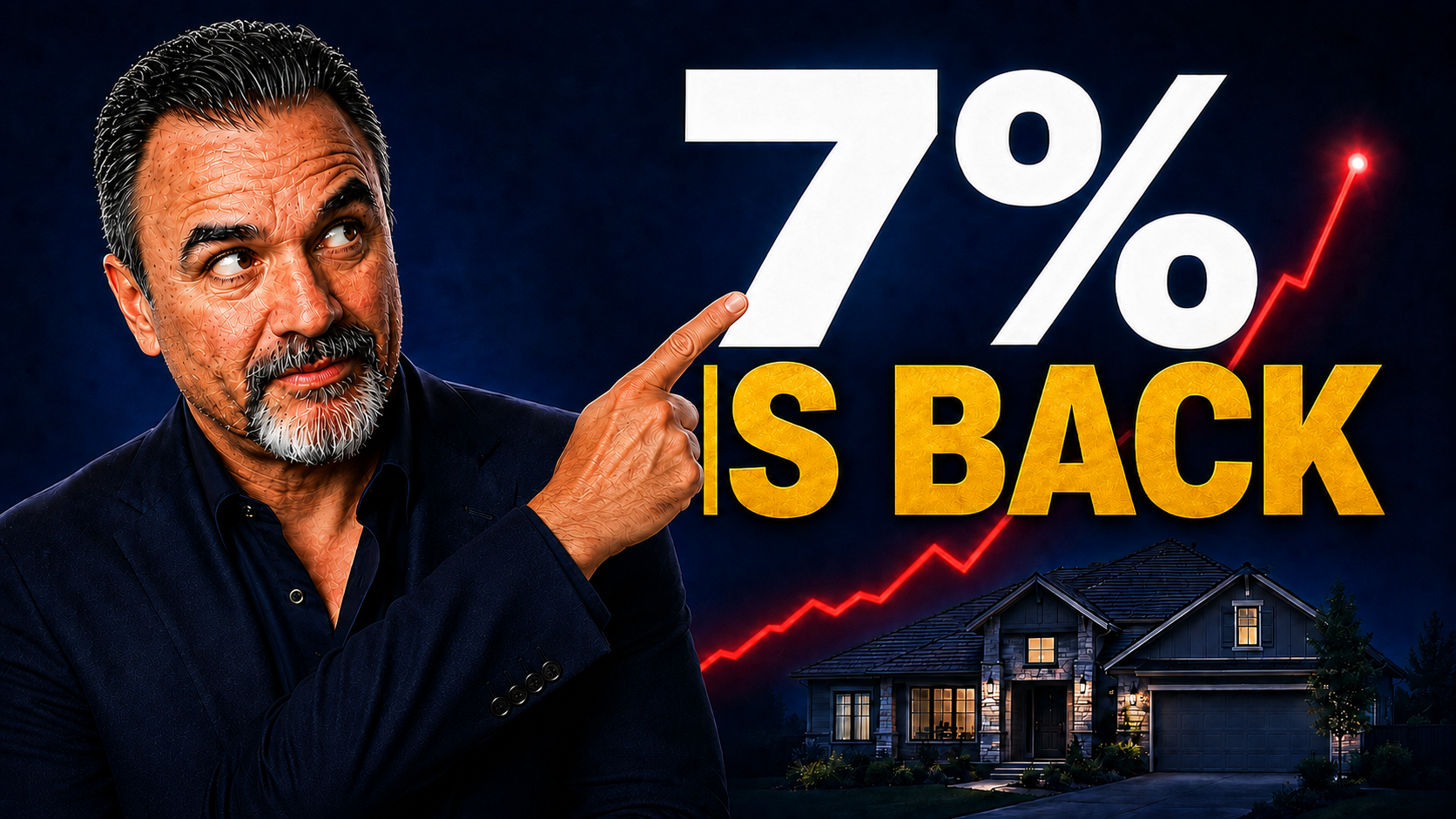
What 5.99% versus 7.00% does to a $400,000 home
Assume a 30-year fixed mortgage, a 20% down payment and a $320,000 loan. The comparison below covers principal and interest only, so property taxes, homeowners insurance, mortgage insurance, HOA dues and closing costs are not included.
| Home price | Down payment | Loan | Rate | Monthly P&I |
|---|---|---|---|---|
| $400,000 | $80,000 (20%) | $320,000 | 5.99% | $1,917 |
| $400,000 | $80,000 (20%) | $320,000 | 7.00% | $2,129 |
| Difference | +$212/month | |||
That is approximately $2,550 more per year for the same house and the same loan amount. For a $400,000 loan rather than a $400,000 purchase price, the difference would be about $266 per month.
Now run the math backward: how much house did the buyer lose?
At 5.99%, the $320,000 loan produces a principal-and-interest payment of about $1,917. At 7.00%, keeping that same payment supports a loan of only about $288,065. With the same 20% down-payment structure, the affordable home price falls to about $360,081.
The percentage result is essentially the same if the buyer uses 5%, 10% or 20% down, provided we hold the payment and down-payment percentage constant. Real underwriting can differ because mortgage insurance, taxes, insurance, debts and loan-program rules affect qualification.
Three paths from here
Hot inflation
Waller becomes more open to a hike. Bond yields and mortgage pricing could face renewed upward pressure, especially if the market was positioned for a hold.
Mixed inflation
The Fed may hold while keeping a future hike alive. Mortgage rates could remain volatile because the statement and Chair Warsh's guidance matter as much as the vote.
Cooling inflation
A hold becomes easier to defend. Yields may get relief, but buyers should not assume mortgage rates automatically return to 5.99%.
What buyers, homeowners and Realtors should do now
Home buyers
Know your payment at more than one rate. Ask for side-by-side scenarios near 6%, 6.5% and 7%, and decide in advance which payment is your limit. If you are under contract, compare the cost of locking with the cost of being wrong.
Homeowners considering a refinance
Do not make the Fed meeting your only trigger. Set a target rate and break-even period, then evaluate the actual savings after costs. A Fed hold does not guarantee mortgage rates fall; a hike can also be partly priced in before it happens.
Realtors
Update buyers' payment and preapproval assumptions before showings. A client qualified near the edge at 5.99% may be shopping almost $40,000 above the price supported by the same payment at 7.00%.
Sources
- Federal Reserve: Governor Waller on the economic outlook
- Bureau of Labor Statistics: 2026 release calendar
- Federal Reserve: FOMC meeting calendar
- Reuters: Waller open to a September hold if inflation cools
- Associated Press: Waller says the August inflation report is pivotal
Educational information only. Payment examples are estimates and are not a loan offer, rate quote or credit decision. Interest rates and program terms change and vary by borrower, property and market conditions. Consult a licensed mortgage professional for a personalized analysis.